

group message module
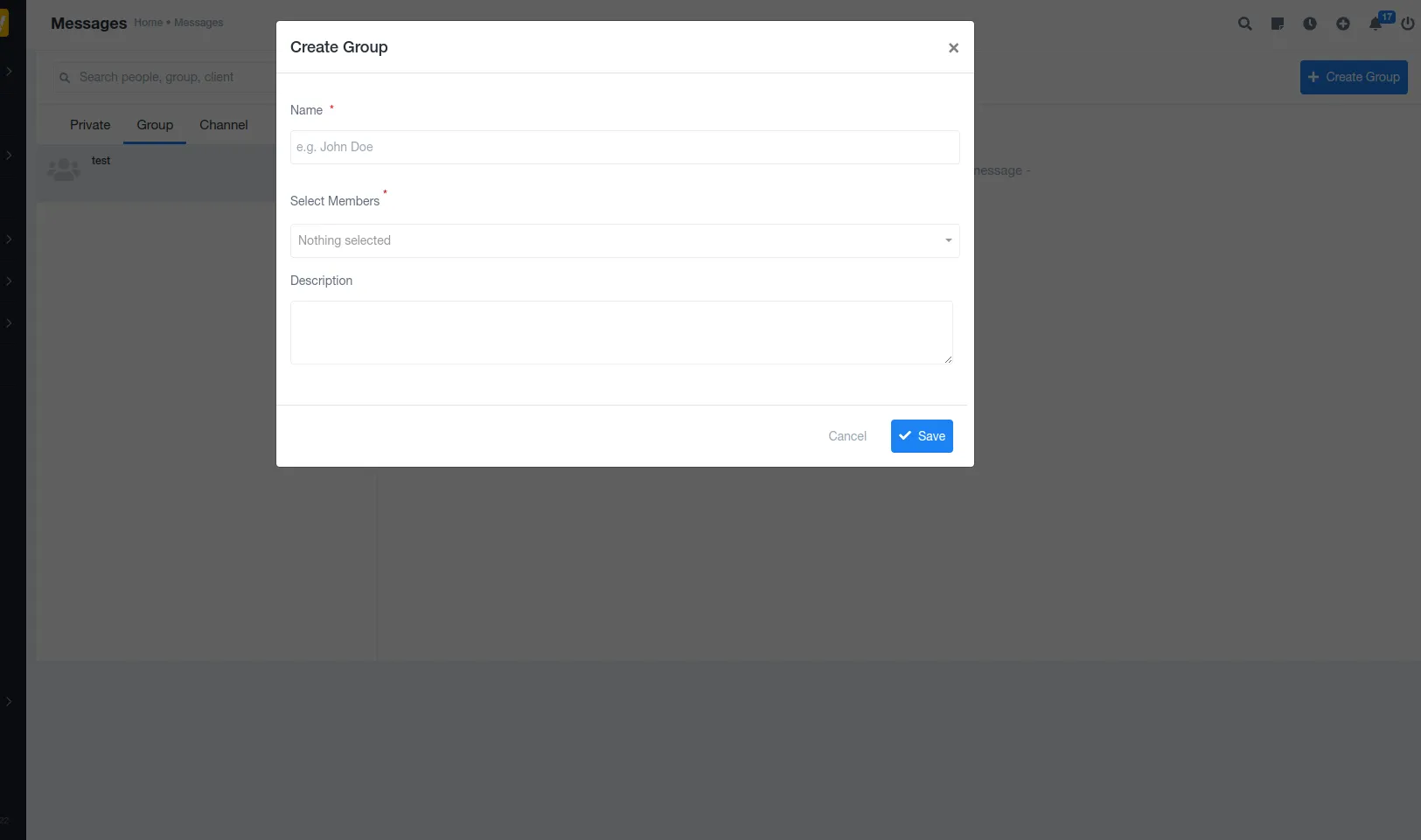 The Group Messaging Module is designed to make internal communication simple, organized, and efficient. Whether teams are working on projects, discussing tasks, or sharing quick updates, this module brings everyone together in one seamless conversation space.
? Clean & Focused Interface
Section titled “? Clean & Focused Interface”The messaging screen is built with clarity in mind:
- A search bar to quickly find people, groups, or clients
- Dedicated tabs for Private, Group, and Channel conversations
- A distraction-free chat area that keeps the focus on conversations
This ensures users can jump straight into communication without confusion.
? Group Conversations Made Easy
Section titled “? Group Conversations Made Easy”With group messaging, teams can:
- Create dedicated group chats for projects or departments
- Share updates with multiple members at once
- Avoid scattered communication across emails or external tools
Everything stays centralized, searchable, and accessible.
➕ Start Conversations Instantly
Section titled “➕ Start Conversations Instantly”The “New Conversation” button allows users to:
- Start a private chat
- Create a group discussion
- Set up channels for ongoing team communication
No complex setup—just click and start talking.
? Organized by Conversation Type
Section titled “? Organized by Conversation Type”Messages are neatly categorized into:
- Private – One-to-one conversations
- Group – Team or project-based chats
- Channel – Structured discussions for broader communication
This structure keeps conversations organized and easy to manage, even as teams grow.
? Why This Module Matters
Section titled “? Why This Module Matters”- Improves team collaboration
- Reduces dependency on third-party chat tools
- Keeps all work-related communication inside your system
- Saves time by making discussions fast and searchable
✅ Perfect For
Section titled “✅ Perfect For”- Project teams
- Remote and hybrid work environments
- Internal announcements and discussions
- Client or department-level communication
document.querySelectorAll(‘.portal-attachment-thumbnail-img’).forEach(function(img) {
img.addEventListener(‘error’, function () {
attachment_error_image(this);
});
});
const attachment_error_image = (attachment) => {
const parentElement = attachment.parentElement;
const defaultIcon = <span class="icon-file-empty"></span><span class="fw-attachment-ext">${escapeHtml(attachment.dataset.extension)}</span>;
parentElement.innerHTML = defaultIcon;
};